Quick Summary
- Understand how to choose the right marble or natural stone for a custom bathtub project.
- Learn the key dimensions, weight, drainage and installation factors before production.
- Compare polished, honed and textured finishes for villas, resorts and hotel bathrooms.
- Use a project-based checklist to reduce mistakes in custom stone bathtub sourcing.
A marble stone bathtub is often the visual centerpiece of a luxury bathroom. In villa master bathrooms, boutique hotel suites and high-end hospitality projects, it does much more than provide bathing function, it defines the atmosphere of the space, communicates material quality and becomes a key part of the design story.
But selecting a custom stone bathtub is not as simple as choosing a beautiful photo. Material suitability, weight, drain location, finish, installation conditions and production feasibility all matter. For hotel buyers, designers, contractors and stone wholesalers, early decisions directly affect both cost and project execution.
This guide explains how to evaluate a marble stone bathtub project from a sourcing and manufacturing perspective, so you can make better decisions before production starts.
Why Marble Stone Bathtubs Are Popular in Luxury Projects
Compared with standard acrylic or ceramic bathtubs, a natural stone bathtub creates a very different visual and tactile effect. It feels architectural rather than purely sanitary, and that is exactly why it is widely used in villas, resorts, boutique hotels and designer residential spaces.
A marble bathtub is often chosen because it offers:
- Strong visual impact and a premium natural material identity
- Unique veining and color variation that cannot be fully replicated by artificial materials
- Better alignment with luxury stone sinks, stone walls, vanity tops and flooring
- A sculptural appearance suitable for freestanding bathroom layouts
- Greater customization flexibility for dimensions, edge profiles and exterior shaping
For high-end projects, the bathtub is not only a bathroom fixture. It can become part of the interior branding and one of the most memorable details in the room.
Step 1: Choose the Right Stone Material for the Bathtub
Not every natural stone performs the same way in a bathroom environment. Some stones are selected mainly for visual impact, while others are preferred for a softer texture, warmer color palette or better consistency across multiple project pieces.
Marble
Marble remains the most requested material for custom luxury bathtubs because of its elegant veining and premium appearance. White marble, beige marble, grey marble and dramatic dark marble are all commonly used depending on the project style.
Marble is a strong choice when the project prioritizes:
- Luxury visual presentation
- Distinctive veining and natural movement
- Coordination with marble vanity tops, sinks or wall cladding
- A more timeless hotel or villa bathroom look
However, marble selection should also consider porosity, stain risk and the practical maintenance expectations of the end client.
Travertine
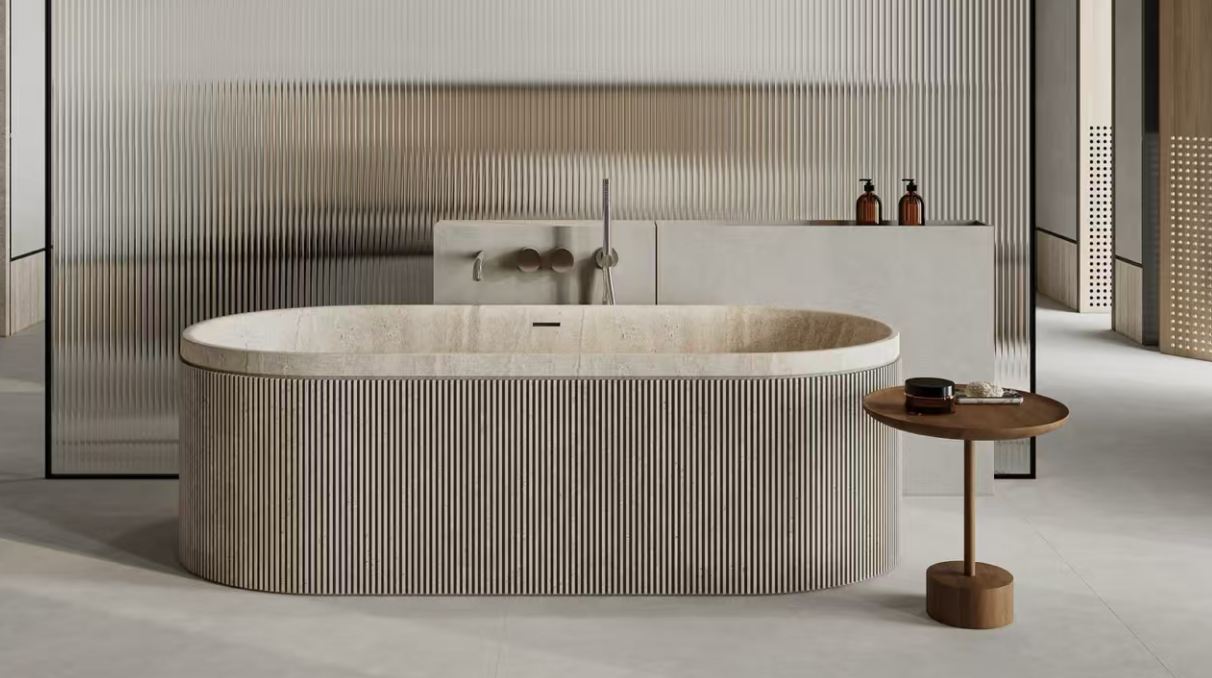
Travertine is often used when the design direction is warmer, softer and more natural. It works especially well in Mediterranean villas, spa-style bathrooms and quiet hospitality spaces where a calm material palette matters more than dramatic veining.
Travertine can be a good option when you want:
- A softer and warmer natural texture
- Neutral beige or cream tones
- A relaxed, resort-style bathroom atmosphere
- Better consistency across a broader material program
If travertine is selected, hole filling, sealing approach and finish choice should be discussed carefully because these details affect both appearance and maintenance.
Limestone
Limestone is usually chosen for understated luxury rather than dramatic visual contrast. It can work well in modern-minimal bathrooms, but the specific density and suitability depend heavily on the exact material source.
Onyx or highly decorative stone
These materials are used more selectively for statement projects. They can create exceptional visual impact, but they also require more caution in design, fabrication, transportation and client expectation management.
Step 2: Decide Whether the Project Needs a Statement Tub or a Practical Tub
Before confirming the bathtub design, clarify the project role of the tub itself. In some bathrooms, the bathtub is a centerpiece intended to create a visual wow effect. In others, it needs to balance luxury appearance with practical guest use, easier maintenance and tighter installation conditions.
This distinction matters because it affects almost every decision that follows, including:
- Bathtub size
- Wall thickness
- Exterior shape complexity
- Stone type selection
- Finish choice
- Weight control strategy
- Budget allocation
A sculptural centerpiece tub for a villa master bathroom may justify a larger size and more dramatic stone pattern. A hotel project with repeated room types may need a more controlled design that balances visual quality with manufacturing repeatability and installation efficiency.
Step 3: Confirm the Bathtub Size Early
Bathtub sizing should never be decided from appearance alone. The correct dimensions depend on bathroom layout, user comfort, installation access, drainage planning and the actual available floor area.
For custom stone bathtub projects, the buyer or designer should ideally confirm:
- Overall length
- Overall width
- Overall height
- Inner soaking depth
- Rim thickness
- Drain location
- Overflow requirement
- Faucet installation method if applicable
A bathtub that looks proportionally perfect in a rendering may still fail in real installation if door access, stair transport, floor loading or plumbing positions are not checked in advance.
Typical size planning logic
A compact stone bathtub may work for boutique hotel suites or smaller bathrooms, while a larger freestanding tub is more suitable for spacious villas or premium master bathrooms. In project work, it is usually more important to evaluate proportion and usability than to chase a single standard size.
When discussing dimensions with a stone bathtub supplier, it is best to send:
- Bathroom layout drawing
- Finished wall to finished wall dimensions
- Drain point location
- Photos or renderings of the target bathroom style
- Preferred bathtub reference images
That allows the supplier to advise whether the requested size is realistic for production and installation.
Step 4: Pay Attention to Bathtub Weight and Structural Load
This is one of the most important topics in any natural stone bathtub project .
Stone bathtubs are significantly heavier than acrylic, fiberglass or resin alternatives. The final weight depends on:
- Stone type and density
- External bathtub dimensions
- Internal cavity size
- Wall and base thickness
- Whether the tub is carved from a solid block
- Whether the design includes a lighter structural optimization approach
For villas and hotel projects especially upperfloor bathrooms the structural load should be checked before production approval. A bathtub that is too heavy for the site can create major installation and engineering problems later.
What should be confirmed before production
Before placing the order, it is smart to verify:
- Where the bathtub will be installed
- Whether it is on the ground floor or upper floor
- Whether structural engineers or project contractors need a final weight estimate
- Whether the tub needs to pass through narrow hallways, elevators or door openings
- Whether installation equipment or lifting support is available on site
A professional supplier should be able to estimate approximate finished weight once the stone type and dimensions are confirmed.
Step 5: Plan the Drain and Overflow Correctly
Beautiful stone bathtubs can still become project problems if drainage details are not confirmed early.
The drain location affects both fabrication and on-site installation. The most common issues happen when:
- The site drain position does not match the approved bathtub drawing
- The bathtub style shown in the reference image does not account for actual plumbing conditions
- The buyer assumes overflow is standard when the supplier has not included it
- Pop-up drain hardware, waste kit size or connection standards differ by market
Before production, make sure the supplier clearly confirms:
- Center drain or offset drain
- Drain hole diameter
- Overflow yes or no
- Overflow position
- Waste kit compatibility
- Any local market plumbing requirements
These details are not glamorous, but they are exactly the kind of details that prevent delays and rework.
Step 6: Choose the Right Surface Finish
The finish changes the mood of the bathtub almost as much as the stone itself. The same marble can look dramatically different depending on whether the surface is polished, honed or textured.
Polished finish
A polished finish creates a glossy, luxurious appearance and usually highlights marble veining most strongly. It is a popular choice for formal luxury bathrooms and statement bathtub designs.
Honed finish
A honed finish feels softer and more contemporary. It reduces glare and often works better in calm, minimalist, spa-like or resort-oriented interiors.
Leathered or textured finish
Some projects use a more tactile finish on the exterior surfaces of the bathtub while keeping the interior smoother. This can create a more crafted, architectural appearance, but the finish must still be suitable for bathroom cleaning and daily use.
When choosing the finish, think about:
- Overall interior style
- Desired luxury level
- Slip / touch preference
- Maintenance expectations
- Whether the bathtub needs to match nearby stone sinks or vanity tops
Step 7: Coordinate the Bathtub With the Rest of the Stone Bathroom Package
In many projects, the bathtub is not a standalone purchase. It is part of a larger bathroom package that may also include:
- Stone vessel sinks
- Stone pedestal sinks
- Vanity tops
- Shower trays
- Wall cladding
- Window sills or decorative stone details
That is why a project-based supplier relationship is often more useful than buying the bathtub in isolation. If the bathtub, sink and vanity materials are planned together, it becomes much easier to control:
- Color consistency
- Finish consistency
- Vein matching logic
- Design language
- Packaging and shipment planning
- Overall project communication
For hotel and villa projects, this integrated approach is usually more efficient than sourcing every stone item separately.
Step 8: Think About Installation Before the Tub Is Produced
Stone bathtub sourcing is not only about fabrication. Installation conditions should influence the design from the start.
Ask these questions before final approval:
- Can the bathtub physically enter the bathroom?
- Are there stairs, tight corridors or elevator limits?
- Will the floor be finished before the tub arrives?
- Does the project require special lifting equipment?
- Will the bathtub be installed before or after vanity and glass partitions?
- Is the site team experienced with heavy stone bathroom products?
The earlier these questions are answered, the lower the risk of damage, delays or design changes after production.
Step 9: Send Better Information to the Supplier
If you want accurate pricing and smoother communication, the best thing you can do is send clearer project information.
For a custom marble stone bathtub inquiry , a strong RFQ package usually includes:
- Reference images of the bathtub style you wants
- Target dimensions
- Preferred stone type or color
- Project quantity
- Drain and overflow requirements
- Project type: villa, hotel, apartment, showroom, wholesale, etc.
- Delivery country
- Drawings or bathroom plans if available
- Desired finish
- Timeline target
Even a simple sketch with notes is better than only sending Need marble bathtub quote. Better inputs lead to faster and more accurate outputs.
Common Mistakes Buyers Make When Sourcing Stone Bathtubs
Choosing only from a photo
A beautiful reference image is useful, but it does not answer questions about dimensions, weight, plumbing, finish or manufacturability.
Ignoring floor load and transport path
This is one of the biggest project risks, especially for upper-floor bathrooms.
Not confirming drain details early
Drain and overflow issues can create unnecessary redesign and installation problems.
Treating all marble as the same
Different marble types vary in veining, density, color consistency and project suitability.
Waiting too long to coordinate with matching stone sinks or vanities
If the bathroom package is planned too late, material coordination becomes harder.
How to Evaluate a Stone Bathtub Supplier
When choosing a custom stone bathtub manufacturer or supplier, look beyond the product photo gallery. Ask whether the supplier can actually support project execution.
Useful evaluation points include:
- Experience with custom stone bathroom products
- Ability to review drawings and advise on feasibility
- Experience with export packing and international shipment
- Capacity to coordinate bathtub + sink + vanity + other stone bathroom items
- Understanding of hotel, villa and wholesale project requirements
- Responsiveness in confirming technical details such as drain, finish and size revisions
For project buyers, communication quality often matters almost as much as the product itself.
Final Checklist Before You Approve a Custom Marble Bathtub
Before confirming production, make sure you have reviewed the following:
- Stone material is confirmed
- Finish is confirmed
- Overall dimensions are confirmed
- Drain and overflow positions are confirmed
- Approximate finished weight is understood
- Installation conditions have been checked
- Quantity and packaging requirements are clear
- Matching sink / vanity / bathroom stone items are coordinated if needed
- Supplier has approved the production drawing or final reference
Final Thoughts
A marble stone bathtub can transform a bathroom into a genuine luxury space, but only if the project is planned correctly from the beginning. The best bathtub projects balance aesthetics with practical execution: the right stone, the right size, the right finish, the right drainage setup and the right supplier communication.
For hotel buyers, wholesalers, contractors and designers, the goal is not only to source a beautiful bathtub. It is to source a bathtub that can actually be produced, shipped, installed and integrated into the project without avoidable problems.
If you are planning a custom stone bathtub project for a villa, resort, hotel or wholesale program, it helps to prepare the drawings, dimensions and reference images early so the supplier can evaluate feasibility and provide more accurate recommendations.
Frequently Asked Questions
What is the best stone for a marble bathtub project?
Marble is one of the most popular choices for luxury bathroom projects because it offers elegant veining and a premium appearance. However, travertine, limestone and other natural stones can also work depending on the design style, maintenance expectations and project budget.
Are stone bathtubs too heavy for upper-floor villa or hotel bathrooms?
Stone bathtubs are much heavier than acrylic or resin tubs, so floor loading must always be checked before final production. The final weight depends on the stone type, wall thickness, bathtub size and whether the design is carved from a solid block or produced with a lighter structural approach.
What information should I send to a custom stone bathtub supplier before production?
It is best to provide the bathtub style reference, target dimensions, drain position, overflow requirements, installation environment, preferred stone material, finish preference and project quantity. Drawings, mood images or architectural plans can help speed up communication and reduce mistakes.
Is polished marble the best finish for all bathtub projects?
Not always. Polished marble creates a luxurious reflective look, but honed or leathered finishes may be more suitable for softer, more natural or boutique-style bathroom spaces. The right finish depends on the design language, maintenance expectations and the visual mood of the project.
Explore More Solutions
Explore related stone collections, materials and custom project solutions.
Travertine Stone Bathtub Guide: Is Travertine a Good Choice for Luxury Bathroom Projects?
Explore more
How to Choose the Right Stone for a Custom Bathroom Sink
Explore more
Marble vs Travertine for Bathroom Sinks
Explore more