Quick Summary
- Understand the pros and limitations of travertine for custom stone bathtub projects.
- Learn how travertine differs from marble in visual style, texture and maintenance expectations.
- Review key planning points including bathtub sizing, finish, drainage, sealing and project suitability.
- Use a supplier-side checklist before ordering a travertine bathtub for villa, hotel or resort bathrooms.
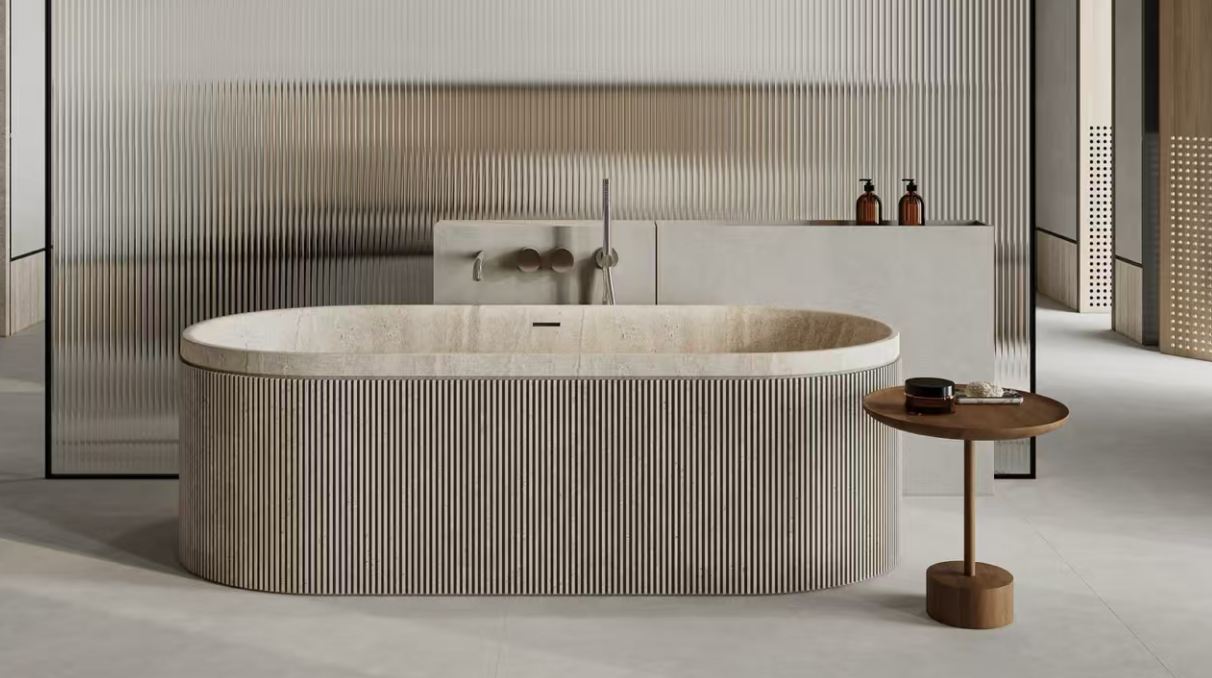
Travertine has become one of the most attractive natural stone options for luxury bathroom projects that want a softer, warmer and more architectural look than polished marble. In villa bathrooms, boutique hotels, spa suites and resort-style interiors, a travertine stone bathtub can create a calm and premium atmosphere that feels natural rather than overly formal.
But choosing travertine for a custom stone bathtub is not only a visual decision. Buyers and designers also need to think about porosity, finish, sealing, drain details, size, weight, cleaning expectations and the practical realities of manufacturing and installation.
This guide explains when a travertine bathtub makes sense, how it compares with marble, and what project buyers should confirm before ordering a custom bathtub for hotel, villa or wholesale bathroom programs.
Why Travertine Is Popular for Luxury Bathroom Projects
Travertine is widely used in architecture and interior design because it creates a refined but relaxed natural stone look. Compared with highly polished marble, travertine often feels warmer, quieter and more organic. That makes it especially suitable for bathrooms designed around calm, earthy and spa-inspired aesthetics.
A travertine bathtub is often selected because it offers:
- A warm and natural visual character
- Soft beige, cream, ivory and light earth-tone color palettes
- A quieter stone texture for resort and villa bathroom environments
- Good compatibility with travertine walls, vanity tops, basins and flooring
- A sculptural freestanding look without feeling too glossy or formal
- Strong appeal for Mediterranean, minimalist, wabi-inspired and wellness-focused interiors
For many luxury projects, travertine is not chosen because it is more dramatic than marble. It is chosen because it feels more balanced, calm and architectural.
What Makes Travertine Different From Marble?
If you are comparing travertine vs marble for a stone bathtub, the first thing to understand is that the decision is usually about design language, not just stone category.
Marble usually offers:
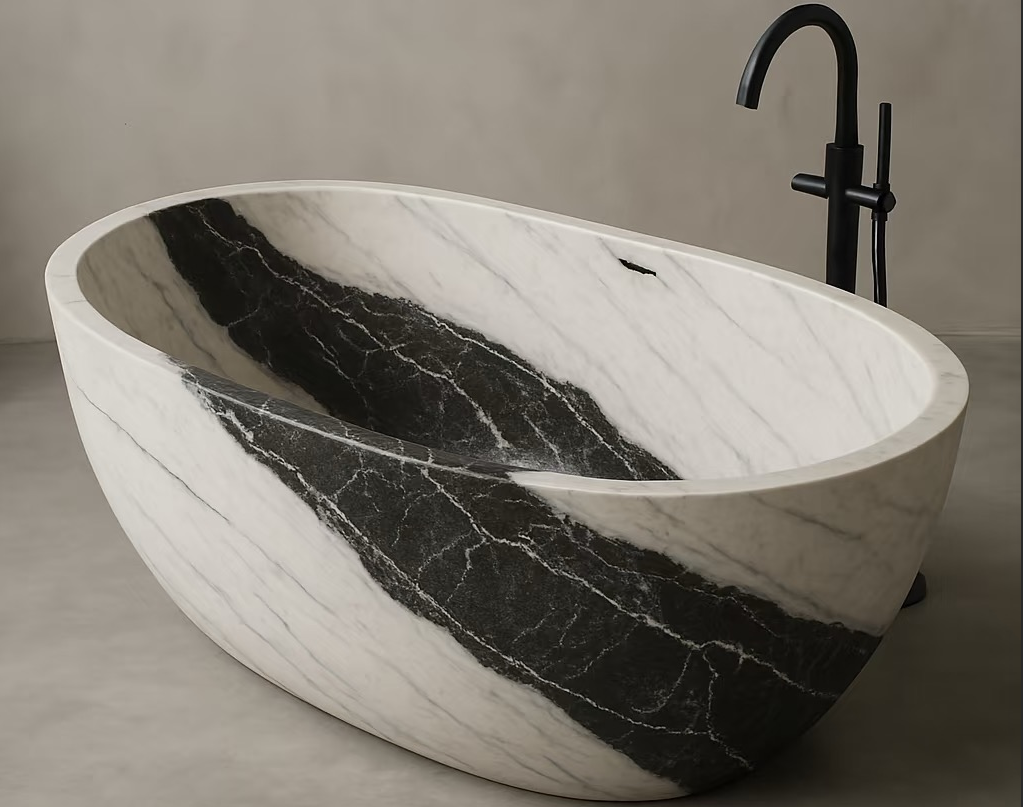
- More visible veining and movement
- A stronger luxury statement
- A polished, formal or high-contrast bathroom look
- Better suitability for dramatic white, grey or dark bathtub designs
Travertine usually offers:
- A softer and warmer natural tone
- A more grounded and organic surface character
- Better alignment with spa, resort and Mediterranean-inspired spaces
- A quieter statement that feels architectural rather than decorative
Neither material is automatically better. The right choice depends on what the bathroom needs to communicate.
If the goal is a bold centerpiece tub in a glamorous master bathroom, marble may be the better fit. If the goal is a relaxed, warm and textural luxury space, travertine may be the stronger choice.
When a Travertine Bathtub Is the Right Choice
A travertine stone bathtub usually works best when the project is trying to achieve one or more of the following:
- A spa-like bathroom mood rather than a formal luxury look
- Warm beige, ivory, sand or cream interior tones
- A natural material palette shared across bathtub, basin, vanity and wall surfaces
- A resort, boutique hotel or villa atmosphere
- A calmer visual effect with less aggressive veining
- A design concept that values texture and softness over shine
Travertine is especially common in:
- Luxury villas
- Boutique hotels
- Resort guest suites
- Wellness-oriented bathroom concepts
- High-end residential projects with Mediterranean or natural minimalist interiors
Step 1: Understand the Type of Travertine You Are Using
Not all travertine looks or behaves exactly the same way. Different quarries and cuts produce different base tones, pore structures, movement patterns and density levels.
Before approving a custom travertine bathtub , it is worth confirming:
- Base color tone: ivory, beige, cream, walnut, silver or mixed
- Visual pattern: linear movement, cloud movement or more uniform texture
- Pore structure and how visible the holes are
- Whether the material will be filled or left more natural
- Whether the project needs consistency across multiple pieces
This matters because a travertine bathtub is often part of a larger bathroom package. If the bathtub needs to match a travertine sink, vanity top or wall cladding, material consistency becomes much more important.
Step 2: Decide Whether You Want Filled or Unfilled Travertine
This is one of the most important design and maintenance decisions in any travertine bathroom project.
Travertine naturally contains small voids and pores. In some applications, these are filled to create a smoother, more refined surface. In others, the designer may want to preserve more of the natural texture for a rustic or highly organic look.
Filled travertine
Filled travertine is generally the safer and more practical choice for a bathtub project because it creates a more even surface and a cleaner overall appearance. It is often preferred when the bathroom style is refined, modern or hospitality-oriented.
Unfilled or more open-texture travertine
This can create a stronger natural and handcrafted look, but it needs to be considered more carefully. In a bathtub environment, very open pores may affect cleaning expectations and long-term maintenance.
For most custom travertine bathtubs used in villas and hotels, the more common direction is a controlled, refined surface rather than a highly rustic one.
Step 3: Choose the Right Finish for a Travertine Bathtub
Travertine can feel completely different depending on the finish. The finish affects not only appearance, but also how the bathtub fits into the surrounding bathroom design.
Honed finish
A honed finish is one of the most common choices for travertine bathtubs. It gives the stone a soft, matte or low-sheen appearance and supports a calm, spa-like mood. For many travertine projects, honed is the most natural and balanced option.
Light polished finish
Some projects want a more elevated and luxurious feel without moving all the way into a high-gloss marble look. In those cases, a lighter polished treatment may be considered depending on the travertine type.
Brushed, leathered or textured exterior
Some custom bathtubs use a smoother interior and a more tactile exterior finish. This can work beautifully in designer bathrooms, but the texture needs to be controlled carefully so it still feels premium and is practical for cleaning around the tub.
When confirming finish, think about:
- Whether the bathroom is formal luxury or relaxed resort style
- Whether nearby travertine basins or vanity tops use the same finish
- Whether the client wants a soft matte look or a brighter reflective surface
- How much daily maintenance the operator or homeowner expects
Step 4: Confirm the Bathtub Size Based on the Actual Bathroom Layout
A travertine bathtub should never be chosen only by reference image. The right size depends on the real bathroom plan, the desired visual proportion and the installation conditions.
For a custom travertine bathtub, it is best to confirm:
- Overall bathtub length
- Overall width
- Height
- Inner soaking depth
- Rim thickness
- Drain position
- Overflow requirement
- Installation method and surrounding clearances
In luxury villa projects, the bathtub may be intentionally oversized to create a statement. In hotel or resort projects, the tub may need to balance visual presence with more standardized room planning.
The most useful information to send the supplier is:
- Bathroom layout drawing
- Reference images
- Finished wall dimensions
- Drain location
- Photos or renderings of the target bathroom style
That gives the manufacturer a much better basis for checking whether the requested bathtub size is realistic.
Step 5: Do Not Ignore Weight and Installation Conditions
Like all natural stone bathtubs, a travertine bathtub can be heavy. The final weight depends on:
- Travertine density
- Bathtub size
- Wall thickness
- Base thickness
- Internal cavity size
- Structural carving method
This is especially important for upper-floor villa bathrooms, penthouses and hotel guest rooms where floor loading and transport path need to be checked early.
Before production approval, confirm:
- Ground floor or upper-floor installation
- Access through doors, corridors, elevators or stairs
- Whether lifting equipment is needed on site
- Whether the contractor needs a weight estimate before final approval
- Whether the bathroom is already partially finished and access is restricted
A beautiful tub that cannot be moved safely into position becomes a project problem very quickly.
Step 6: Plan Drain and Overflow Details Before Production Starts
Drain and overflow details are often overlooked when buyers focus too much on shape and stone selection. But in real project work, these technical details are essential.
Before approving a travertine bathtub, make sure the supplier confirms:
- Drain position
- Drain diameter
- Center drain or offset drain
- Overflow requirement
- Overflow location
- Compatibility with local plumbing hardware or waste kits
If the bathroom plumbing position is already fixed, the bathtub drawing should be coordinated around that condition rather than copied blindly from a photo reference.
Step 7: Think About Sealing and Maintenance Expectations
Travertine is a porous natural stone, so maintenance planning should be part of the buying decision from the beginning.
This does not mean travertine is unsuitable for bathtubs. It means the buyer should understand the maintenance logic and discuss the material honestly with the supplier.
Key points to consider include:
- Whether the travertine is filled or more open-textured
- What finish is being used
- Whether the bathroom is private residential, hotel or spa use
- How often the tub will actually be used
- What cleaning products are likely to be used on site
- Whether the operator expects a very low-maintenance material
In most cases, a travertine bathtub should be sealed appropriately for bathroom use, and the end client should receive basic care guidance for natural stone.
Step 8: Coordinate the Travertine Bathtub With the Rest of the Bathroom Package
A travertine bathtub is often only one part of the full bathroom stone program. Many projects also need:
- Travertine vessel sinks
- Pedestal sinks
- Vanity tops
- Shower trays
- Wall cladding
- Window surrounds or decorative stone details
That is why project buyers often benefit from sourcing the bathtub together with the rest of the bathroom stone package. It makes it easier to control:
- Material tone consistency
- Surface finish consistency
- Overall design language
- Packaging and shipment planning
- Communication with one supplier rather than multiple factories
For villa and hotel work, this coordinated approach is usually much more efficient than treating the bathtub as a standalone purchase.
Common Advantages of Travertine Bathtubs
Warm and calming appearance
Travertine creates a soft, inviting atmosphere that works especially well in spa-like and resort-oriented bathrooms.
Strong compatibility with natural interior palettes
It pairs well with warm woods, neutral stone floors, bronze fittings, textured plaster and other quiet luxury materials.
Good fit for wellness and hospitality projects
Travertine is often visually aligned with the kind of spaces that hotels and villas want to feel relaxing rather than overly polished.
Distinctive but not overly dramatic
For projects that want a luxury bathtub without a high-contrast marble statement, travertine can be a very smart middle ground.
Common Risks or Limitations to Think About
Porosity and sealing need attention
Travertine requires proper finishing and sealing decisions. It is not a material that should be specified carelessly.
Not every travertine works the same way
Color, pore structure and density vary by source, so the exact material should be reviewed before production.
Rustic-looking travertine is not always ideal for every bathroom
A highly open or rough travertine surface may not match the expectations of every hotel or homeowner.
Buyers sometimes underestimate coordination work
If the tub needs to match sinks, vanity tops and wall materials, that should be planned from the beginning rather than after the bathtub is already approved.
How to Decide Between a Marble Bathtub and a Travertine Bathtub
A simple way to think about it is this:
Choose marble when you want:
- More dramatic veining
- A stronger luxury centerpiece
- A formal, polished or statement-driven bathroom look
- High visual contrast
Choose travertine when you want:
- Warm, natural and quiet luxury
- A spa, resort or Mediterranean-inspired bathroom
- Softer visual texture
- Better harmony with calm earth-tone interior palettes
The right answer is not about which material is more expensive or more luxurious in theory. It is about which material supports the project concept more effectively.
What to Send a Supplier for a Custom Travertine Bathtub Inquiry
If you want accurate pricing and useful feedback from a stone bathtub supplier, send more than a single inspiration image.
A better RFQ package includes:
- Bathtub reference photos
- Target dimensions
- Bathroom layout or installation drawing
- Preferred travertine tone or reference material
- Finish preference
- Drain and overflow requirements
- Project quantity
- Delivery country
- Project type: villa, hotel, wholesale, showroom, residential development, etc.
- Whether matching sinks or vanity tops are also needed
The more clearly you define the project, the easier it is for the supplier to review feasibility and recommend the right approach.
Final Checklist Before Approving a Travertine Stone Bathtub
Before production starts, make sure you have confirmed:
- Travertine material tone and sample direction
- Filled or unfilled surface strategy
- Final finish
- Bathtub dimensions
- Drain and overflow details
- Approximate weight and installation access
- Sealing and maintenance expectations
- Packaging and shipment requirements
- Matching bathroom stone items if the project includes them
- Final approved production drawing
Final Thoughts
A travertine stone bathtub can be an excellent choice for luxury bathroom projects that want warmth, texture and a more natural design language than polished marble. In the right villa, resort or boutique hotel environment, travertine often feels calm, architectural and quietly premium.
The key is to approach the bathtub as a real project item, not just a beautiful photo. Material grade, filled vs unfilled treatment, finish, drain details, size, sealing and installation conditions all need to be reviewed before production.
If you are planning a custom travertine bathtub for a hotel, villa or wholesale bathroom program, it is worth preparing your dimensions, reference images and bathroom layout early so the supplier can evaluate the project more accurately and help you avoid preventable mistakes.
Frequently Asked Questions
Is travertine a good material for a stone bathtub?
Travertine can be an excellent choice for a stone bathtub when the project wants a warm, soft and natural bathroom look. It is especially suitable for villas, resorts and spa-style spaces. However, the right material grade, finish, filling treatment and sealing approach should be confirmed carefully before production.
What is the difference between a travertine bathtub and a marble bathtub?
A travertine bathtub usually creates a softer, warmer and more organic visual effect, while a marble bathtub often looks more dramatic, formal or luxurious because of its veining and polish. The better choice depends on the project style, maintenance expectations, bathroom palette and the overall design language.
Do travertine bathtubs require sealing?
Yes. Travertine is a porous natural stone, so sealing is normally recommended for bathroom applications. The exact sealing strategy depends on the travertine type, surface finish, whether the pores are filled and the maintenance expectations of the end client or hotel operator.
Can a travertine bathtub be customized for hotel or villa projects?
Yes. Travertine bathtubs can be customized in size, shape, finish and drain configuration for villa, hotel and wholesale projects. To get accurate recommendations, buyers should provide reference images, dimensions, drain requirements, preferred stone tone and project quantity before production.
Explore More Solutions
Explore related stone collections, materials and custom project solutions.