Quick Summary
- Learn how to choose the right marble, travertine or limestone for a custom stone dining table project.
- Understand tabletop sizing, thickness, base structure and weight considerations before production.
- Compare polished, honed and textured finishes for villas, restaurants and hospitality interiors.
- Use a project-based sourcing checklist to reduce mistakes when buying custom stone dining tables.
A stone dining table is no longer just a functional piece of furniture. In luxury villas, boutique hotels, restaurants, private clubs and designer residences, it often becomes one of the most important visual anchors in the interior. It introduces natural texture, architectural weight and a strong material identity that ordinary tables rarely achieve.
But buying a custom stone dining table is not as simple as selecting a beautiful slab. Tabletop size, stone thickness, edge profile, base structure, final weight, packing and installation all need to be considered before production starts. For wholesalers, designers, contractors and hospitality buyers, these decisions directly affect cost, lead time and project execution.
This guide explains how to evaluate a custom stone dining table project from a sourcing and manufacturing perspective, so you can make better decisions before you place the order.
Why Stone Dining Tables Are Popular in Luxury Interior Projects
Stone dining tables are widely used because they combine furniture function with architectural presence. Compared with wood, veneer or glass tables, natural stone tables feel more permanent, more tactile and more closely connected to the rest of a premium interior material palette.
A custom stone dining table is often chosen because it offers:
- Strong visual impact and a premium natural material identity
- Unique veining, texture and color variation that artificial surfaces cannot fully replicate
- Better coordination with stone sinks, vanity tops, flooring, wall cladding and fireplace surrounds
- A sculptural look that works well in villas, hotel lounges, restaurants and designer dining spaces
- Flexibility for custom sizing, tabletop shapes, base combinations and finish selection
For many high-end projects, the dining table is not just a table. It becomes part of the design statement and one of the most memorable furniture pieces in the room.
Step 1: Choose the Right Stone Material for the Tabletop
Not every natural stone creates the same visual effect or performs the same way in daily use. Some materials are selected for dramatic veining, while others are chosen for warmth, calmness or consistency across a broader furniture package.
Marble
Marble remains one of the most popular choices for luxury stone dining tables because of its elegant veining and strong decorative presence. White marble, beige marble, grey marble and dark marble can all work depending on the project style.
Marble is often selected when the project prioritizes:
- Strong luxury expression
- Distinctive veining and visual movement
- Coordination with other marble elements in the interior
- A more formal, high-end dining atmosphere
At the same time, marble selection should consider porosity, maintenance expectations and the level of daily use the table will receive.
Travertine
Travertine is frequently chosen for warmer, softer and more natural interiors. It works especially well in Mediterranean villas, boutique hospitality projects and quiet contemporary spaces where texture matters more than dramatic pattern.
Travertine can be a strong choice when you want:
- A warm, earthy material character
- Beige, cream or sand-toned interiors
- A relaxed but still premium atmosphere
- Better harmony with calm architectural palettes
If travertine is used, filling method, finish choice and edge detailing should be reviewed carefully because these influence both appearance and maintenance.
Limestone
Limestone is often used for understated luxury. It usually has a quieter surface than marble and can work well in modern-minimal interiors where the goal is refinement rather than visual drama. However, suitability still depends on the exact stone source, density and intended use.
Onyx or highly decorative stone
Onyx and other highly decorative stones are more selective options. They can create exceptional statement pieces, but they also require more caution in fabrication, reinforcement, transport and client expectation management.
Step 2: Clarify Whether the Table Is a Statement Piece or a High-Use Table
Before finalizing the design, it helps to define the role of the table in the project.
Some stone dining tables are designed mainly as visual centerpieces for villa dining rooms, show homes or premium club spaces. Others are intended for repeated daily use in restaurants, hospitality dining rooms or high-traffic family environments. This difference affects almost every technical decision that follows.
It influences:
- Stone material selection
- Tabletop thickness
- Edge profile
- Base design
- Finish choice
- Maintenance expectations
- Structural reinforcement approach
- Budget allocation
A dramatic marble table for a villa dining room may justify bolder veining and a more sculptural base. A hotel restaurant table, by contrast, may need a more controlled design that balances aesthetics with durability, stability and easier maintenance.
Step 3: Confirm Tabletop Size Early
Stone table projects should never be sized from appearance alone. The correct tabletop dimensions depend on room scale, seating layout, circulation, access path and the proportions of the base.
For a custom stone dining table, it is best to confirm:
- Overall table length
- Overall table width
- Final table height
- Top thickness
- Shape: rectangular, oval, round, racetrack or custom form
- Edge profile
- Seating target and chair clearance
- Whether the table will be a single slab or multi-piece construction
A table may look balanced in a rendering but still become impractical if there is not enough circulation space around it or if the final slab size creates shipping and installation problems.
Typical sizing logic
A round stone table may work well for compact villas or private dining spaces, while a long rectangular or oval table is more suitable for larger hospitality or family dining rooms. In most projects, proportion and usability matter more than chasing a single standard size.
When discussing dimensions with a stone table supplier, it is best to provide:
- Floor plan or dining room dimensions
- Target number of seats
- Reference images of the desired style
- Preferred tabletop shape
- Any special project restrictions such as elevator size or narrow access paths
This helps the supplier judge whether the requested size is realistic for production, shipping and installation.
Step 4: Pay Attention to Tabletop Thickness, Weight and Structural Reinforcement
For custom stone dining tables, tabletop thickness is not only a visual design decision. It directly affects table weight, transportation cost, installation difficulty, structural safety and long-term durability.
A thicker tabletop usually creates a stronger luxury appearance, especially for statement dining tables used in villas, hotels, restaurants and showroom spaces. However, once the tabletop size becomes large, weight control becomes one of the most important technical issues in the project.
When evaluating a custom stone dining table, buyers should think about:
- The overall tabletop length and width
- The visible edge thickness the designer wants to achieve
- Whether the table is intended as a light contemporary piece or a heavy sculptural centerpiece
- The stone type and its density
- The size and load-bearing ability of the base
- Shipping, handling and on-site installation conditions
For large tables in villas, hotels, clubs or upper-floor spaces, this matters because the final product must not only look good, it must also be transportable, installable and structurally safe.
Why large stone tabletops can become a problem
As tabletop dimensions increase, the total stone weight rises quickly. A large dining table may look elegant in a drawing, but in production and real installation it can create several risks:
- The tabletop may become too heavy for safe handling
- Transportation and packaging costs can increase significantly
- Long spans may increase the risk of stone cracking if the structure is not properly reinforced
- The base may not provide enough support for the final load
- On-site lifting, moving and installation become more difficult
This is especially important for large marble dining tables, long conference tables and oversized custom stone tabletops.
How oversized stone tabletops are usually optimized
When a dining table top becomes too large or too heavy, factories often use a reinforced composite structure instead of relying only on a full solid slab. This is a very practical solution in modern stone furniture manufacturing because it can reduce weight and lower the risk of cracking without sacrificing the appearance of the table.
Common reinforcement methods include:
- Wood backing panel on the underside of the stone top This helps improve structural stability and is often used when a project needs a strong tabletop support layer while maintaining a thick visual edge.
- Aluminum honeycomb backing This is a common solution for large-format stone furniture and architectural panels. It significantly reduces overall weight while keeping the panel rigid, making it especially useful for oversized dining tables or projects where transportation and installation are difficult.
- Fiberboard or other structural backing materials Depending on the design, some factories may use engineered backing layers to improve stability, reduce weight and help distribute stress more evenly across the tabletop.
Why this reinforcement matters
For large dining tables, these composite methods are not only about making the table lighter. They also help reduce the chance of breakage during:
- Production handling
- Packing and export shipment
- Inland transportation
- On-site installation
- Long-term use where unsupported spans may create stress concentration
In other words, if the dining table top is very large, a reinforced structure is often a smarter engineering solution than insisting on a fully solid heavy slab.
Thickness should be judged together with structure, not alone
A tabletop that looks thick from the outside does not always need to be made from a full solid stone block of that same thickness. In many custom projects, the visible thickness can be achieved through a mitered buildup or composite edge construction, while the internal structure is optimized for better weight control.
That means when discussing a table with your supplier, it is useful to confirm:
- Actual stone thickness
- Visible edge thickness
- Whether a backing panel or honeycomb reinforcement will be used
- Whether the table is designed as a fully solid top or a weight optimized structure
- Whether the base is engineered for the final tabletop load
For project buyers, designers and wholesalers, this discussion is extremely important because it affects not only appearance, but also cost, logistics, installation feasibility and product safety.
Step 5: Select the Right Table Base Design
A stone dining table is never only about the slab. The base is equally important because it affects stability, visual balance, legroom and the overall design language.
Common base options include:
- Solid stone pedestal bases
- Metal bases with stone tops
- Sculptural mixed-material bases
- Wooden or metal frames supporting a stone top
The right base depends on the table size, seating needs and style direction. A heavy stone top may look elegant on a slim base in a rendering, but the real structure still needs to be engineered correctly.
When reviewing a base design, ask:
- Does it provide enough support for the tabletop size?
- Will chairs fit comfortably around it?
- Is the visual proportion right for the tabletop thickness?
- Can the base be shipped efficiently?
- Will installation on site be simple or complicated?
The best custom stone tables balance aesthetics with structural logic.
Step 6: Choose the Right Edge Profile
The edge profile has a major impact on how a stone dining table feels visually. Even when two tables use the same marble slab, they can look completely different depending on whether the edge is sharp and minimal, softly rounded, or designed to create a thicker architectural appearance.
For custom stone dining tables, common options include:
- Straight edge
- Beveled edge
- Bullnose edge
- Double-layer look or mitered build-up
- Rounded contemporary edge
- Custom sculpted edge
Common Stone Tabletop Edge Profiles
The edge profile changes the character of a stone dining table more than many buyers expect. It affects how formal, soft, minimal or architectural the table feels, and it also influences fabrication complexity, safety, and how heavy the tabletop appears visually.
Below are some of the most common edge profiles used for custom marble and natural stone dining tables.
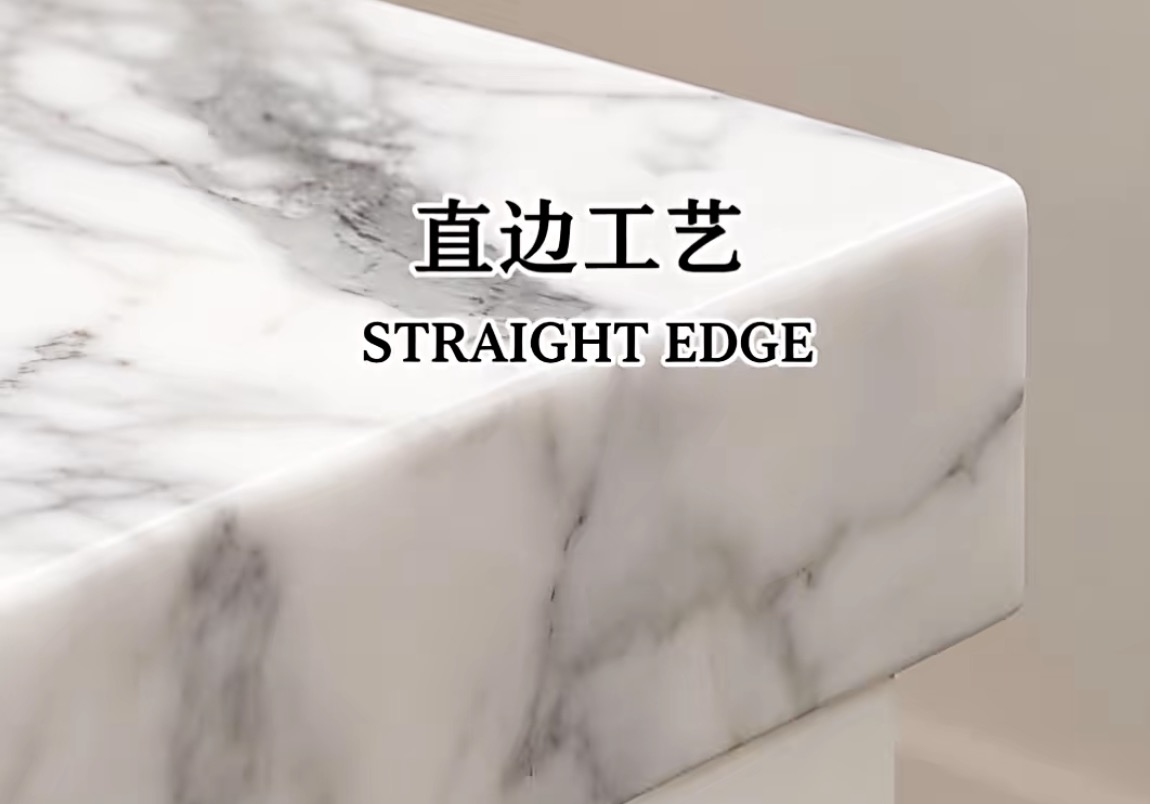
Clean, minimal and modern. A good choice for contemporary dining tables and simple architectural interiors.
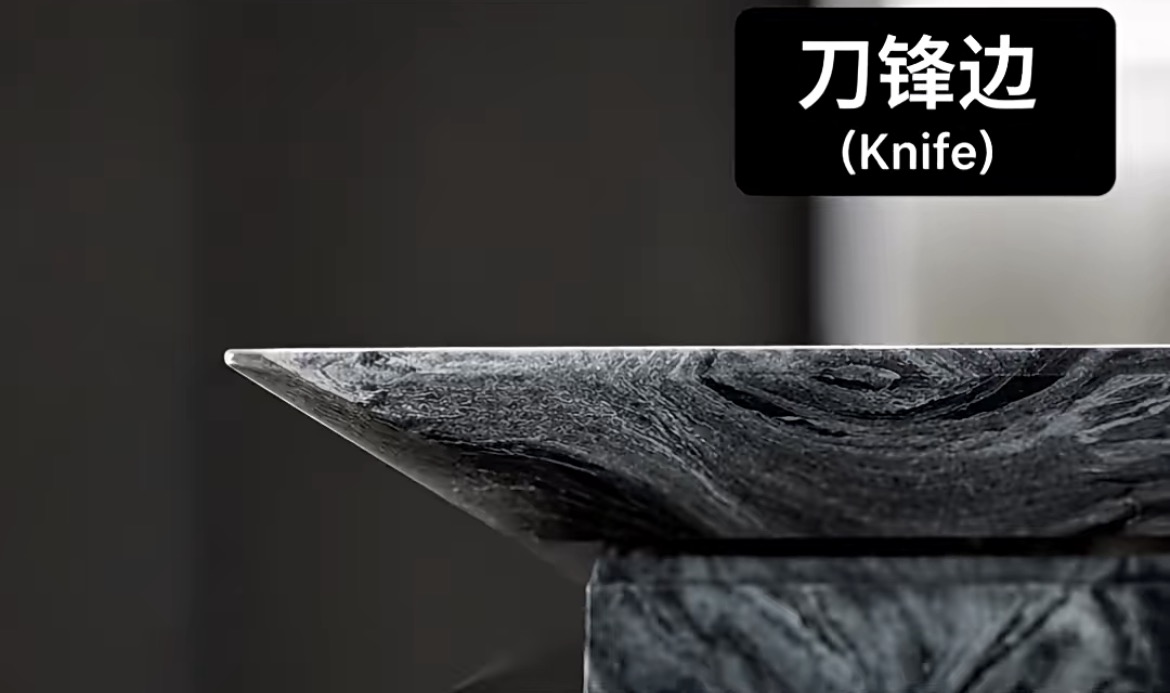
Adds a sharper and more refined look while keeping the table visually light. Often used in elegant modern interiors.
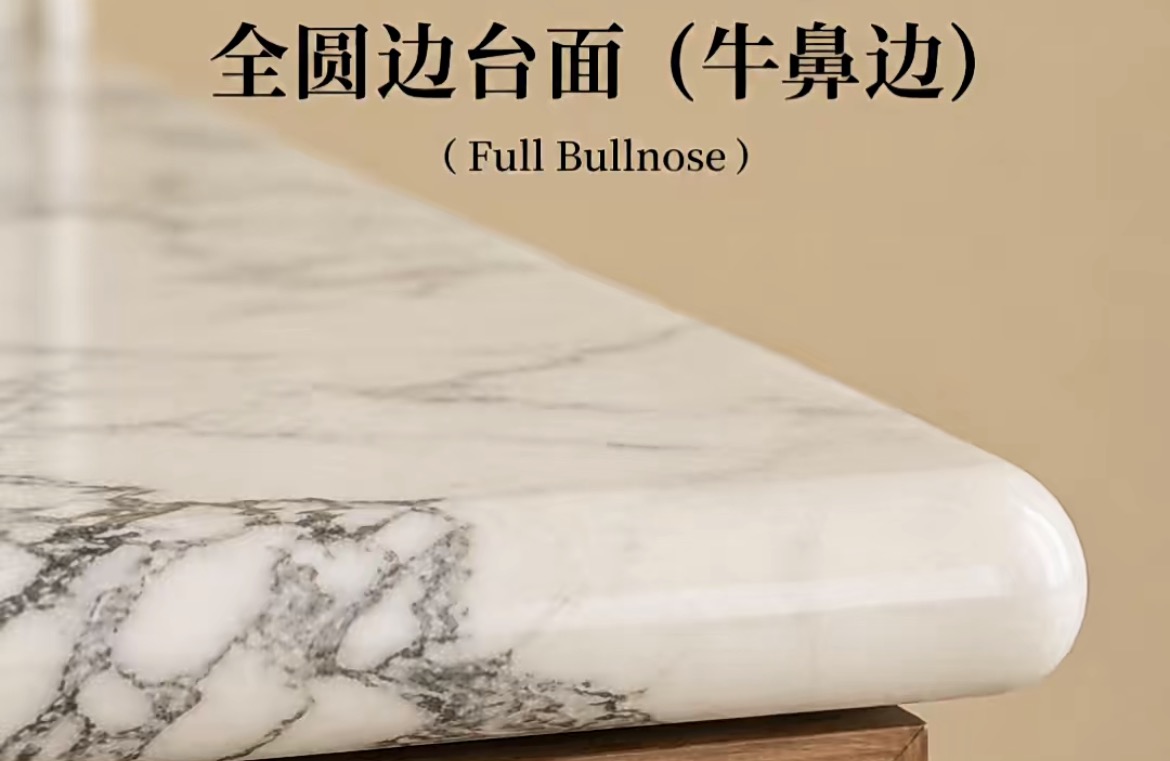
Rounded and softer to the touch. Suitable when the project wants a safer, friendlier and more classic table appearance.
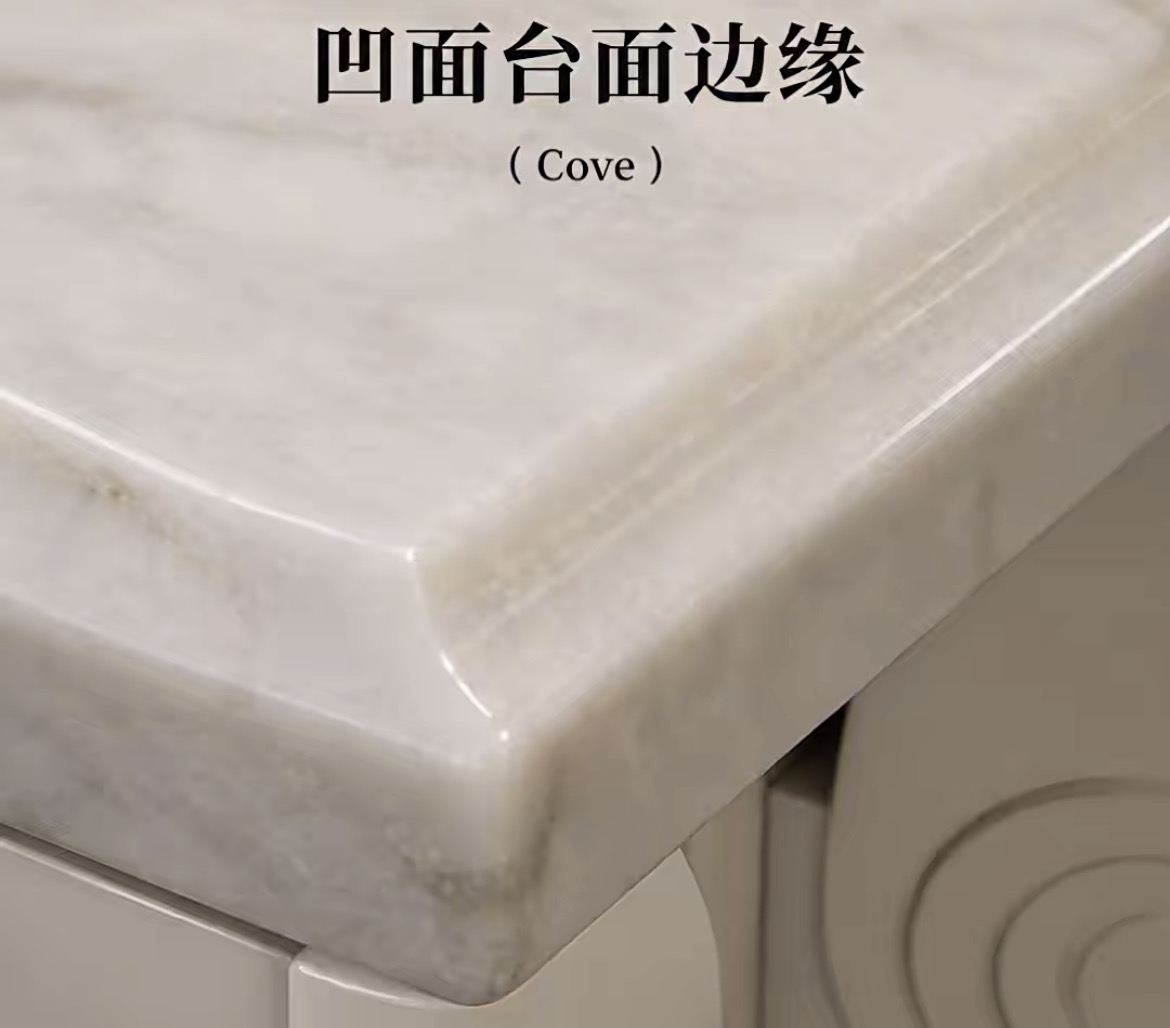
Creates the appearance of a thicker and more substantial tabletop without always using a full thick solid slab.
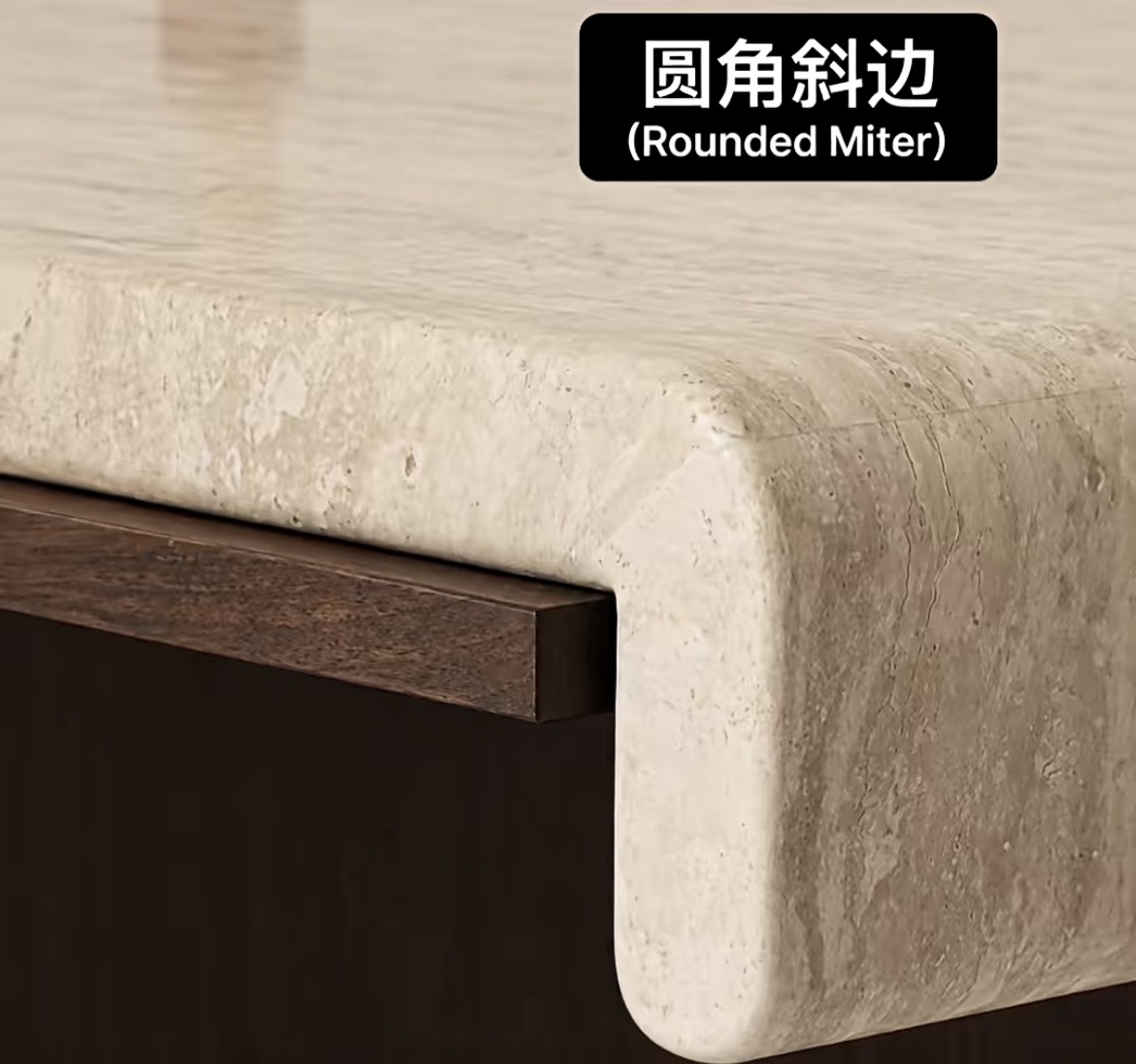
A softer modern profile with a more sculptural feeling. Often used for high-end custom furniture projects.
In practical project work, the best edge is not always the most decorative one. A large hotel dining table, a luxury villa table and a retail showroom display table may all require different edge treatments depending on style, budget, fabrication complexity and shipping risk.
When confirming the edge profile with a supplier, it is helpful to send:
- a clear edge detail reference image
- target tabletop thickness
- whether the tabletop is solid stone or reinforced composite structure
- the visual style you want to achieve
Step 7: Choose the Right Surface Finish
Surface finish changes not only the appearance of a stone dining table, but also its touch, maintenance level and suitability for different project environments. The same marble slab can feel formal and luxurious, soft and contemporary, or more practical and commercial depending on the finish selected.
When evaluating finish options, it is useful to think about three things at the same time:
- The interior style of the project
- The expected level of daily use
- The maintenance habits of the end client
Polished finish
A polished finish is one of the most classic choices for marble dining tables. It highlights color depth and veining very strongly, creating a glossy and luxurious appearance. It works well for formal dining spaces, statement furniture pieces and interiors that want a premium reflective surface.
Honed finish
A honed finish creates a softer, more understated look. It reduces surface glare and often feels more contemporary than polished marble. This finish is commonly used in modern villas, boutique hospitality projects and dining spaces that want a calm natural tone.
Leathered or textured finish
Some stone dining tables use a leathered or lightly textured finish to create more tactile character. This can work especially well when the project wants a natural, handcrafted or architectural look rather than a highly polished decorative surface.
Polyester-coated finish
This is an important finish option to understand in the stone furniture industry, especially because it is widely used in China for marble furniture and custom stone tables.
In simple terms, a polyester coated finish adds a protective treatment layer over the stone surface. For stone furniture, this approach is often used to improve day-to-day practicality because it can make the tabletop:
- More resistant to staining
- More resistant to surface wear in normal use
- Easier to clean compared with some untreated natural stone surfaces
- Better suited to furniture applications where visual consistency and easier maintenance are priorities
That is one reason why polyester-finished stone furniture has become popular in many furniture production environments.
But polyester-finished also has limitations
Although polyester treatment can improve stain resistance and surface durability, it is not a perfect solution for every project. One important risk is high heat exposure.
If a polyester coated stone tabletop is exposed to excessive heat, there can be a risk of surface bubbling or coating damage. For example, placing very hot cookware or other high temperature objects directly onto the surface may create problems over time.
Because of that, buyers should evaluate whether the table will be used mainly as:
- A decorative luxury dining table
- A high-frequency family dining table
- A restaurant or hospitality table
- A conference or meeting table
- A showroom display piece
The more demanding the real usage environment is, the more important it becomes to discuss finish suitability clearly with the supplier.
Finish should match both design and usage
There is no single best finish for every stone dining table. The right choice depends on how the table will actually be used and what kind of visual effect the project wants to achieve.
In practice:
- Polished is often chosen for luxury impact and strong marble expression
- Honed is often chosen for a softer contemporary look
- Textured or leathered is often chosen for tactile and natural character
- Polyester coated is often chosen when easier maintenance and stronger surface protection are priorities, especially in furniture-focused production contexts
For custom projects, the safest approach is to ask the supplier for finish samples or closeup finish photos before final approval, especially if the order includes multiple tables or is intended for hospitality or commercial use.
Step 8: Coordinate the Dining Table With the Rest of the Interior Package
In many projects, the stone dining table is not an isolated furniture purchase. It may be part of a broader package that includes:
- Stone coffee tables
- Side tables
- Console tables
- Fireplace surrounds
- Vanity tops
- Stone sinks
- Dining room flooring or wall cladding
That is why a project-based supplier relationship is often more valuable than buying a single table in isolation. If the table is coordinated together with other stone furniture or interior stone items, it becomes much easier to control:
- Material consistency
- Finish consistency
- Design language
- Packaging and shipping consolidation
- Communication efficiency across the project
For hospitality and villa work, this integrated approach is often more efficient than sourcing every piece separately from different suppliers.
Step 9: Think About Packing, Shipping and Installation Before Production
A custom stone dining table may look simple in photos, but large natural stone furniture pieces can create real logistics challenges if planning happens too late.
Ask these questions before approving the order:
- Can the tabletop enter the building through the actual access path?
- Is the project on the ground floor or an upper floor?
- Does the site have elevator or staircase restrictions?
- Will the tabletop ship as one slab or multiple sections?
- How will the base and top be protected during shipment?
- Is on-site assembly required?
- Does the installation team have experience with heavy stone furniture?
These are not secondary questions. They directly affect whether the table arrives safely and can be installed without damage or costly delays.
Step 10: Send Better Information to the Supplier
If you want more accurate pricing and smoother project communication, the best thing you can do is provide clearer input.
For a custom stone dining table inquiry, a strong RFQ package usually includes:
- Reference images of the desired table style
- Tabletop dimensions
- Preferred tabletop shape
- Preferred stone type or target color
- Thickness expectation
- Base concept or base reference
- Project quantity
- Delivery country
- Timeline target
- Drawings, renderings or mood boards if available
Even a rough furniture layout or inspiration sketch is better than sending only Need stone dining table quote. Better information leads to better recommendations, fewer misunderstandings and faster quotation.
Common Mistakes Buyers Make When Sourcing Stone Dining Tables
Choosing only from a slab photo
A beautiful slab is important, but it does not solve questions about size, base proportion, structural support, packing or transport.
Ignoring final weight
Large stone tables can become difficult to move, install or position if weight is not considered early.
Focusing only on the tabletop and not the base
A strong tabletop design still fails if the base is unstable, impractical or visually unbalanced.
Not checking access path
Long stone tabletops can be difficult to move through elevators, staircases and narrow residential entrances.
Waiting too late to coordinate matching furniture
If the table is part of a wider interior package, planning material and finish consistency late can create avoidable problems.
How to Evaluate a Stone Dining Table Supplier
When choosing a custom stone furniture supplier, look beyond product photos and staged showroom images. What matters is whether the supplier can support actual project execution.
Useful evaluation points include:
- Experience with custom stone tables and stone furniture
- Ability to review drawings and advise on feasibility
- Understanding of slab size limits, weight control and base coordination
- Export packing experience for heavy stone furniture
- Ability to coordinate multiple stone furniture items in one project
- Responsiveness in discussing technical details, not only appearance
For project buyers, good communication and practical problem-solving are often just as important as the product itself.
Final Checklist Before You Approve a Custom Stone Dining Table
Before confirming production, make sure you have reviewed the following:
- Stone material is confirmed
- Tabletop size is confirmed
- Tabletop thickness is confirmed
- Edge profile is confirmed
- Base design is confirmed
- Approximate weight is understood
- Finish is confirmed
- Access path and installation conditions have been checked
- Packing and shipping method are clear
- Supplier has approved the final drawing or production reference
Final Thoughts
A custom stone dining table can transform a dining space into something far more architectural, tactile and memorable than a standard furniture solution. But the best projects do not happen by selecting a beautiful stone alone. They come from balancing aesthetics with structure, weight, scale, finish, transport and supplier coordination.
For designers, wholesalers, contractors and hospitality buyers, the goal is not only to source a table that looks impressive in a photo. It is to source a stone dining table that can actually be fabricated correctly, packed safely, shipped efficiently and installed smoothly in the real project.
If you are planning a custom stone dining table project for a villa, hotel, restaurant or furniture collection, it helps to prepare the dimensions, reference images and usage requirements early so the supplier can evaluate feasibility and provide more accurate recommendations.
Frequently Asked Questions
What is the best stone for a custom dining table?
It depends on the project style, usage conditions and budget. Marble is often chosen for dramatic veining and luxury appearance, travertine works well for warm natural interiors, and limestone is suitable for understated contemporary projects. The right choice should balance aesthetics, maintenance expectations and production feasibility.
Are stone dining tables too heavy for residential or hospitality projects?
Stone dining tables are significantly heavier than wood or metal tables, so the final weight should always be considered before production. Weight depends on the tabletop size, stone type, slab thickness, base material and structural design. Access routes, floor conditions and installation planning should be checked in advance.
Can I customize the size and base design of a stone dining table?
Yes. Custom stone dining tables can usually be produced in different lengths, widths, tabletop edge profiles and base styles. However, the final design must still be reviewed for structural stability, transport practicality and production feasibility.
Which finish is best for a stone dining tabletop?
Polished surfaces create a more luxurious and reflective look, while honed finishes feel softer and more contemporary. Textured or leathered finishes may also be used in some projects, but the best finish depends on the design language, touch preference, maintenance expectations and how the table will be used.
Explore More Solutions
Explore related stone collections, materials and custom project solutions.